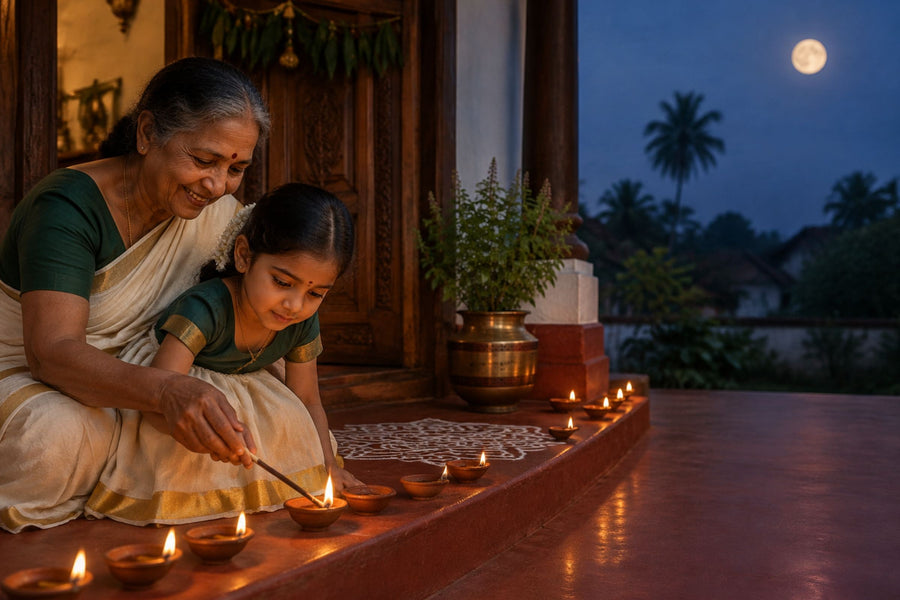
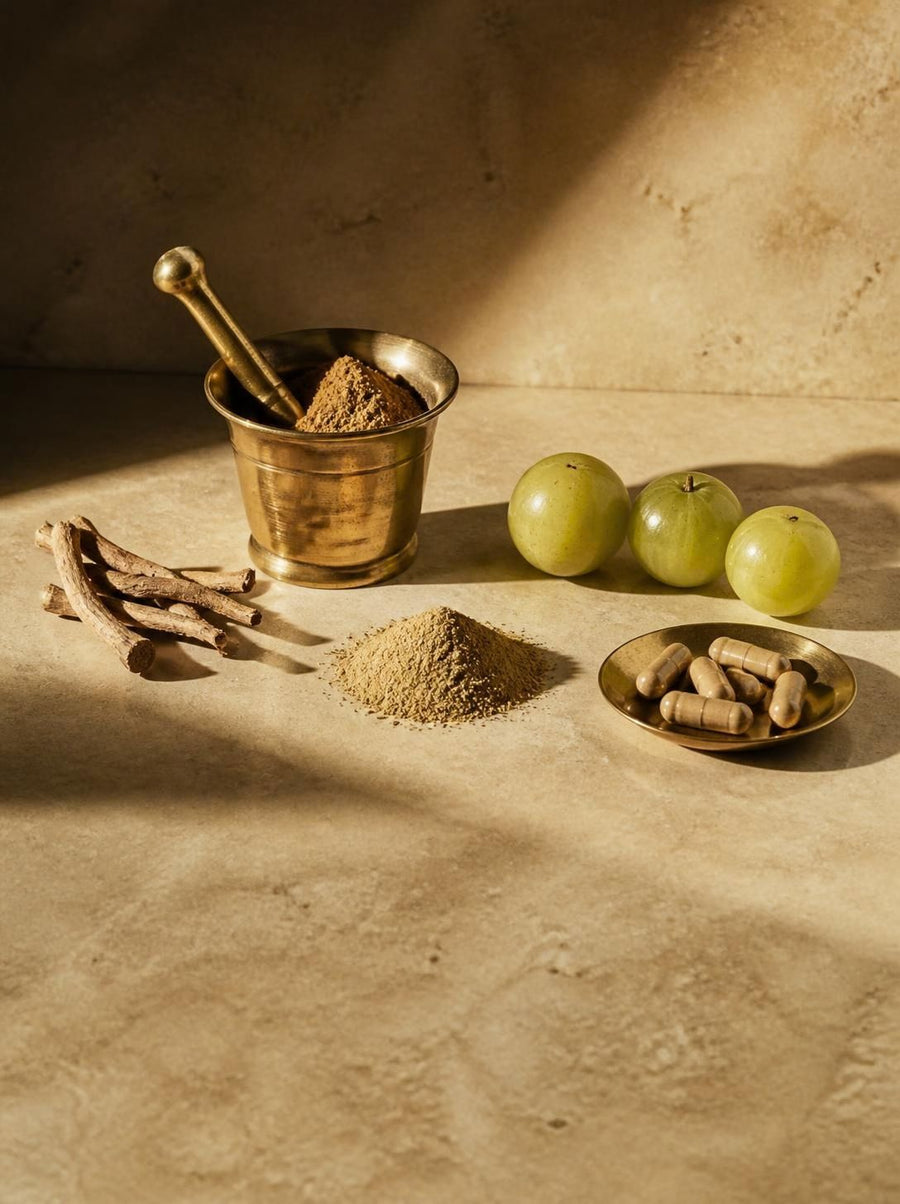
If you grew up in a home that kept the old Diwali ways, you probably remember being woken before sunrise. The house still dark. Someone calling your name from the kitchen. A small brass bowl of oil warming on the stove, and a hand already reaching for your hair.
You may have complained about it then. Most of us did.
But ask anyone today what Diwali morning felt like, and that oil bath is often the first thing they mention. The smell of it. The warmth. The feeling of being looked after before the day had even started.
This guide is about keeping that moment alive: how to take a traditional Diwali oil bath at home, a short two-day plan to feel your best for the festival, and how to look after yourself once the celebrations are over.
Diwali 2026 is on Sunday, 8 November. There is still time.
Quick answer
The Diwali oil bath (abhyanga snana) is a traditional dawn ritual. Warm a herbal oil, massage it into your scalp and body, leave it on for 15 to 30 minutes, then wash it off with warm water and a mild herbal cleanser. Diwali 2026 falls on Sunday, 8 November.
Why Diwali is the right time to care for yourself
Diwali comes just as the weather changes. Mornings get cooler, the air turns dry, and skin starts to feel tight by evening. Ayurveda has always paid attention to these seasonal shifts, and oil is one of its oldest answers to dryness.
There is another reason, too. The festival takes a lot out of us. Weeks of cleaning. Hours in the kitchen. Guests, travel, late nights and far too many sweets.
A little care before and after doesn’t take anything away from the celebration. It lets you actually enjoy it.
Your Diwali oil bath ritual, in four simple pieces
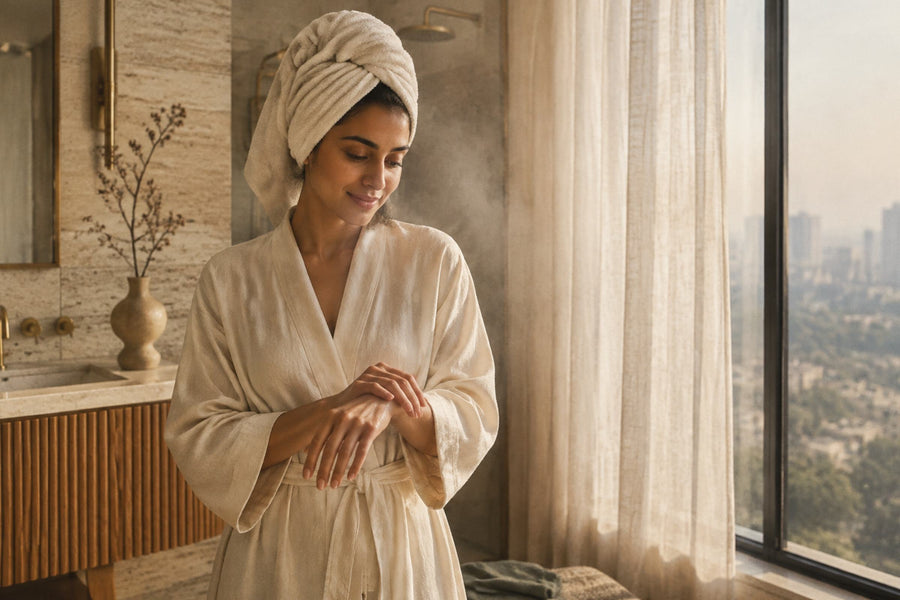
During Diwali, you look after everyone else. The house, the food, the guests, the lamps. The oil bath is the one hour that belongs to you. Here is all you need.
- For the body: Sruthi Herbal Skin Care Oil with aloevera and tulsi. It is made to be massaged in before your morning bath, which is exactly what Diwali morning asks for. Skin feels soft and nourished long after you’ve dressed. One of our bestsellers. Begin your oil bath ritual →
- For the hair: Sruthi Hair Care Oil, a traditional sesame-based herbal oil. Remember your mother’s champi? This is that feeling, in a bottle, prepared the time-tested way for hair that feels soft and looks glossy. One of our bestsellers. Treat your hair this Diwali →
- To wash it all off: Arappu Hair Wash Powder (Albizia amara). Long before shampoo, this is what grandmothers reached for after an oil bath. A natural herbal powder that lifts the oil without stripping your hair. Wash the traditional way →
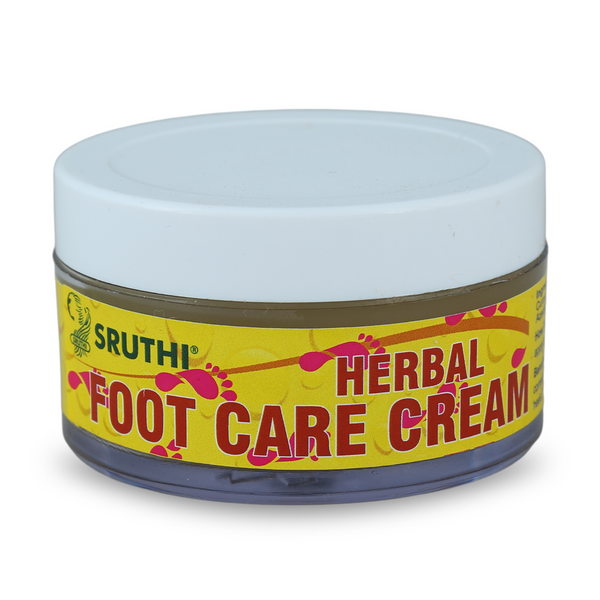
- For tired feet: Sruthi Herbal Foot Care Cream with beeswax, turmeric and aloe vera. Your feet carry the whole festival: the cleaning, the cooking, the standing through puja. Rub a little in before bed and, with regular use, heels feel softer and more supple. Give your feet some love →
The traditional Diwali oil bath (abhyanga snana)
Abhyanga is the Ayurvedic practice of massaging the body with warm oil. On Diwali morning it becomes abhyanga snana, the auspicious oil bath taken at dawn. In many South Indian homes it is still the very first thing that happens on Deepavali, before the new clothes and the first sweet of the day.
How to take a Diwali oil bath at home
- Warm the oil. Stand the bottle in a bowl of hot water for a few minutes. You want it comfortably warm, not hot. Check a few drops on your inner wrist before you start.
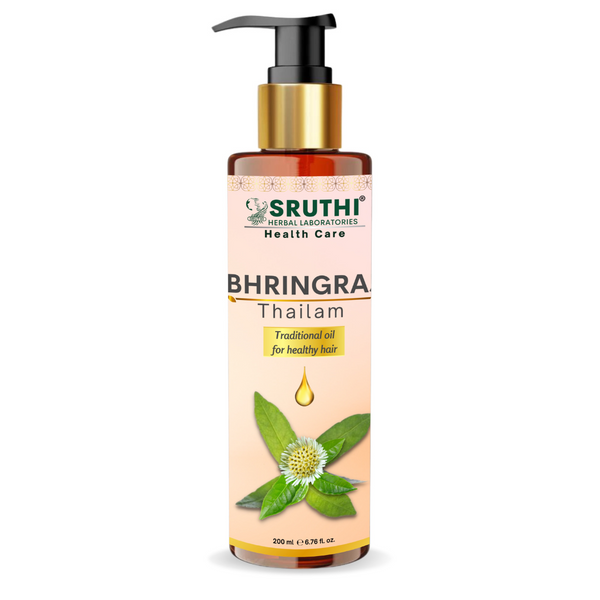
- Start with your scalp. Part your hair into sections and work the oil into your scalp with your fingertips in small circles. Take your time here. Use Sruthi Hair Care Oil, a traditional sesame-based hair oil, or Bhringraj Thailam, a classic Ayurvedic hair oil.
- Then the body. Massage Sruthi Herbal Skin Care Oil with aloevera and tulsi into your arms, legs, shoulders and back. Long strokes along the limbs, small circles over the knees and elbows.
- Save a minute for your feet. A slow foot massage, called padabhyanga, is the part most people end up loving most.
- Now rest. Leave the oil on for 15 to 30 minutes. Sip something warm. Enjoy the quiet before everyone else wakes up.
- Wash it off. Use warm water, and for your hair, Arappu herbal hair wash powder (Albizia amara). Yes, the oil gets everywhere. That’s part of it. Pat yourself dry with a soft towel.
One important safety note: oiled hair and loose fabric catch fire easily. Wash the oil out completely before you go near diyas or fireworks, tie your hair back, and wear cotton around open flames.
A two-day plan to glow on Diwali
Forget the ten-step routines. Two calm days are enough.
Two days before Diwali
- Wash your face morning and night with a mild cleanser. Nothing harsh.
- Before bed, rub Sruthi Herbal Foot Care Cream for dry, cracked heels into your feet. After a week of cleaning, they’ll thank you.
- Drink more water than you think you need, and get to bed a little earlier.
The day before Diwali
- Moisturise after cleansing. If your skin feels dry in the cooler weather, try Sruthi Almond Cream. If you like something lighter, Sruthi Peach Cream for dewy, hydrated skin gives a fresh, festive glow.
- Short on time in the morning? Oil your hair the night before and wash it at dawn.
- Lay out tomorrow’s clothes tonight. The fewer decisions at 5 am, the better.
On Diwali morning
- Take your oil bath at dawn, then a light moisturiser on your face.
- Go easy on makeup. Let your skin breathe between celebrations.
After the celebrations: coming back to yourself
When the lamps are put away and the last guest has left, give yourself a few quiet days.
- Wash your face every night. Makeup, dust, smoke: take it all off before bed, no matter how late it is.
- Get back to a steady bedtime. Your body will settle faster than you expect. Our guide to evening rituals for restful sleep has a few simple ideas.
- Eat simply for a while. After days of sweets, warm, plain meals and plenty of water feel good.
- Keep your skincare short. A light gel in the morning, a little oil at night. That’s enough. Here is our effortless skincare routine for busy days.
- Watch the smoke. If smoke bothers you or you have a breathing condition, stay indoors during the heaviest firework hours and follow your doctor’s advice.
Diwali gifts that say “take care of yourself”
Sweets are gone in a day. A self-care gift is felt every morning for weeks. And it carries a quiet message: you look after all of us, so please look after yourself too.
- For your mother or grandmother: Sruthi Hair Care Oil. All those years of champi, finally given back.
- For the one who never sits down: Sruthi Herbal Foot Care Cream. A small thank-you for every hour on their feet.
- For a sister or a close friend: Sruthi Herbal Skin Care Oil. An invitation to a slower morning.
Not sure what to choose? Our bestselling Ayurvedic gifts are a good place to start.
The Sruthi approach
Sruthi Herbal Laboratories began in the Nilgiri hills in 1999. Today we make our botanical care products in our own GMP-certified facility, drawing on traditional Ayurvedic knowledge and making it practical for everyday life.
We have always believed the rituals that matter most are small ones. Warm oil. A slow wash. Ten quiet minutes. Diwali just gives us a reason to remember them.
Make this Diwali morning yours.
Warm the oil. Slow down. Start the festival of lights feeling cared for. Shop Herbal Skin Care Oil · Shop Hair Care Oil · See all bestsellers
Frequently Asked Questions
When is Diwali in 2026?
Diwali 2026 is on Sunday, 8 November, with Lakshmi Puja that evening. Puja timings differ from city to city, so check your local panchang.
Why do people take an oil bath on Diwali?
The Diwali oil bath, or abhyanga snana, is a tradition of bathing at dawn on Deepavali morning. It is a way of starting the festival feeling fresh and renewed, and it comes from the Ayurvedic practice of massaging the body with warm oil.
Which oil is best for a Diwali oil bath?
Most families use a sesame or coconut-based herbal oil. For the body, try a light oil made for massage before bathing, such as Sruthi Herbal Skin Care Oil. For the scalp, a sesame-based hair oil like Sruthi Hair Care Oil or Bhringraj Thailam is the traditional choice. Patch-test any new oil first.
How long should I keep the oil on before bathing?
Fifteen to thirty minutes is plenty. You don’t need to leave it on for hours.
How do I wash oil out of my hair without harsh shampoo?
Use warm water and a traditional herbal cleanser such as Arappu herbal hair wash powder. It takes the oil out gently. For the body, a mild cleanser or bath powder works well.
Is the oil bath right for everyone?
Most people enjoy it. Traditionally, though, it is skipped on days when you have a fever, a cold or an upset stomach. If you are pregnant, have a skin condition or aren’t sure, check with a doctor or AYUSH physician first.
How can I take care of my skin during Diwali?
Wash your face every night, moisturise well in the dry weather, keep makeup light and drink enough water. And always wash the oil out of your hair before going near diyas or fireworks.
A final thought
Diwali is about light. Before you light the lamps for everyone else, take a few quiet minutes for yourself.
Wishing you and your family a bright, joyful and peaceful Diwali.
Our personal care products are cosmetics intended to care for the appearance of the skin and hair. They are not intended to diagnose, treat or prevent any disease. Patch-test before first use, and consult a qualified healthcare professional if you have a medical condition.