Something has quietly changed in the way many of us think about wellbeing.
We read labels more carefully. We ask where ingredients come from. We are more interested in daily habits that keep us well than in quick fixes once something goes wrong.
And in that search, more and more people are rediscovering a tradition that has been part of Indian life for thousands of years: Ayurveda.
This article looks at why Ayurvedic products are becoming a first choice for so many people, what Ayurveda can and cannot offer, and how to choose authentic products you can trust.
What is Ayurveda?
Ayurveda is one of the world's oldest systems of traditional medicine, with roots in classical Sanskrit texts such as the Charaka Samhita and the Sushruta Samhita.
At its heart is a simple idea: wellbeing comes from balance, between body and mind, and between our daily habits and the natural rhythms around us. Ayurveda places strong emphasis on prevention, through routine (dinacharya), diet, rest and seasonal living.
In India, Ayurveda is a recognised system of medicine, overseen by the Ministry of AYUSH.
Why more people are choosing Ayurvedic products
1. A preference for botanical ingredients
Many people are drawn to products made with plants they recognise, such as tulsi, turmeric, neem, amla and aloe vera. These ingredients carry centuries of traditional use and feel familiar in a way that long chemical names often do not.
2. A focus on everyday prevention
Ayurveda encourages looking after yourself every day, not only when something feels wrong. That idea fits naturally with modern interest in sleep, nutrition, movement and stress management.
3. A holistic view of wellbeing
Rather than treating the body as separate parts, Ayurveda considers digestion, rest, mind and lifestyle together. Many people find that this whole-person approach simply makes sense.
4. The pleasure of ritual
A warm oil massage. A herbal face pack on a quiet Sunday. A calming evening routine. Ayurveda turns self-care into ritual, and rituals are easier to keep.
Herbs at the heart of Ayurveda
Some of the botanicals most closely associated with Ayurvedic tradition include:
- Tulsi (holy basil), revered in Indian homes and traditionally valued for everyday wellbeing
- Turmeric, used for centuries in food, rituals and skin care
- Neem, traditionally valued for skin and scalp care
- Amla (Indian gooseberry), a traditional nourishing fruit
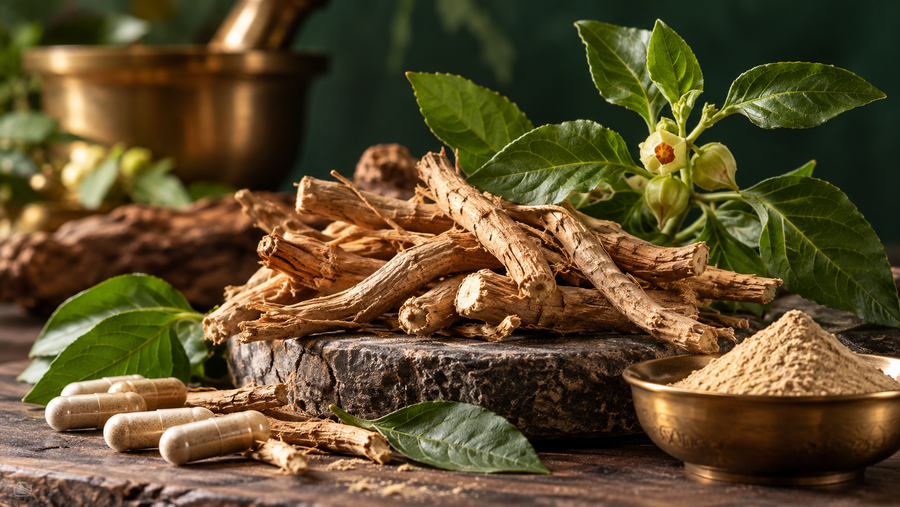
- Ashwagandha, a restorative herb now studied for stress and sleep. Read our Ayurvedic guide to Ashwagandha
- Guduchi, a classical herb traditionally used in seasonal wellness
- Aloe vera, cherished for soothing skin care
Traditional use and modern scientific evidence are not the same thing. Some herbs have been studied extensively, others very little, and results vary by preparation. A thoughtful approach respects both.
Ayurvedic formulations and botanical cosmetics
It helps to know that not every herbal product is an Ayurvedic medicine.
- Ayurvedic formulations, such as capsules, powders and medicated oils, are prepared according to Ayurvedic principles and made under an AYUSH manufacturing licence.
- Botanical cosmetics, such as face gels, creams and face packs, use plant-derived ingredients to care for the appearance of skin and hair.
At Sruthi, we make both, and each product page tells you which kind it is.
How to choose authentic Ayurvedic products
Not all herbal products are made to the same standard. Before you buy, look for:
- A licensed manufacturer. Ayurvedic medicines in India should carry the manufacturer's licence number on the label.
- GMP-certified manufacturing. Good Manufacturing Practice helps ensure consistency, hygiene and quality.
- Clear ingredients. Ideally with botanical names and the plant part used.
- Batch number, manufacturing and expiry dates. Signs of a properly controlled product.
- A real address and contact details. A manufacturer you can reach.
- Realistic claims. Be cautious of products promising miracle cures or instant results.
Natural does not always mean risk-free
Herbal products can interact with medicines and may not suit everyone. Quality also matters: buying from licensed, quality-controlled manufacturers is one of the best ways to protect yourself.
If you are pregnant or breastfeeding, take regular medication, have a health condition or are preparing for surgery, please consult a qualified healthcare professional or AYUSH physician before using any Ayurvedic formulation.
The Sruthi approach
Sruthi Herbal Laboratories was founded in Coimbatore, Tamil Nadu, in 1999. For more than two decades, we have made Ayurvedic formulations and botanical cosmetics in our own GMP-certified facility.
Our belief is simple: traditional knowledge deserves to be respected, presented honestly and crafted with care.
Explore our ranges:
- Ayurvedic wellness formulations
- Botanical skin care
- Botanical hair care
- Calm Mind & Easy Breathing aromatic oils
- Our bestsellers
Frequently Asked Questions
Why are Ayurvedic products becoming popular?
People are increasingly drawn to botanical ingredients, everyday prevention, a holistic view of wellbeing and the simple pleasure of self-care rituals, all of which are central to Ayurveda.
Is Ayurveda scientifically proven?
Some Ayurvedic herbs, such as Ashwagandha and turmeric, have been studied in modern research, with results that vary by preparation and outcome. Many traditional uses have not yet been confirmed by clinical studies. It is best to view the evidence herb by herb.
Are Ayurvedic products safe?
Safety depends on the product, its quality and the person using it. Choose licensed, GMP-certified manufacturers, follow the directions and seek professional advice if you have a health condition or take medication.
Can I take Ayurvedic products with my regular medicines?
Some herbs can interact with medicines. Always check with your doctor before combining an Ayurvedic formulation with prescribed medication.
How can I tell if an Ayurvedic product is authentic?
Look for the manufacturer's licence number, GMP certification, clear ingredients, batch and expiry details, a real company address and realistic claims.
What is the difference between Ayurvedic medicines and herbal cosmetics?
Ayurvedic formulations are prepared according to Ayurvedic principles under an AYUSH licence. Herbal or botanical cosmetics use plant ingredients to care for the appearance of skin and hair.
Where are Sruthi products made?
All Sruthi products are made in India, in our GMP-certified facility in Coimbatore, Tamil Nadu.
A final thought
Ayurveda has endured not because it promises miracles, but because its central ideas, balance, rhythm and care, remain quietly true.
Choosing Ayurveda is not about turning back time. It is about bringing timeless wisdom into the way we live today.
This article is intended for educational purposes and is not medical advice. It does not diagnose, treat or prevent any disease. Please consult a qualified healthcare professional before starting any new herbal product.